Finding the right HVAC company is one of the most important decisions you’ll make as a Central Florida homeowner. With the cooling season stretching 10+ months per year, your air conditioner isn’t a luxury; it’s essential to daily life.
The wrong contractor can result in improper installation, unnecessary repairs, voided warranties, or worse. The right company delivers reliable service, honest pricing, and equipment that performs efficiently for 12-15 years.
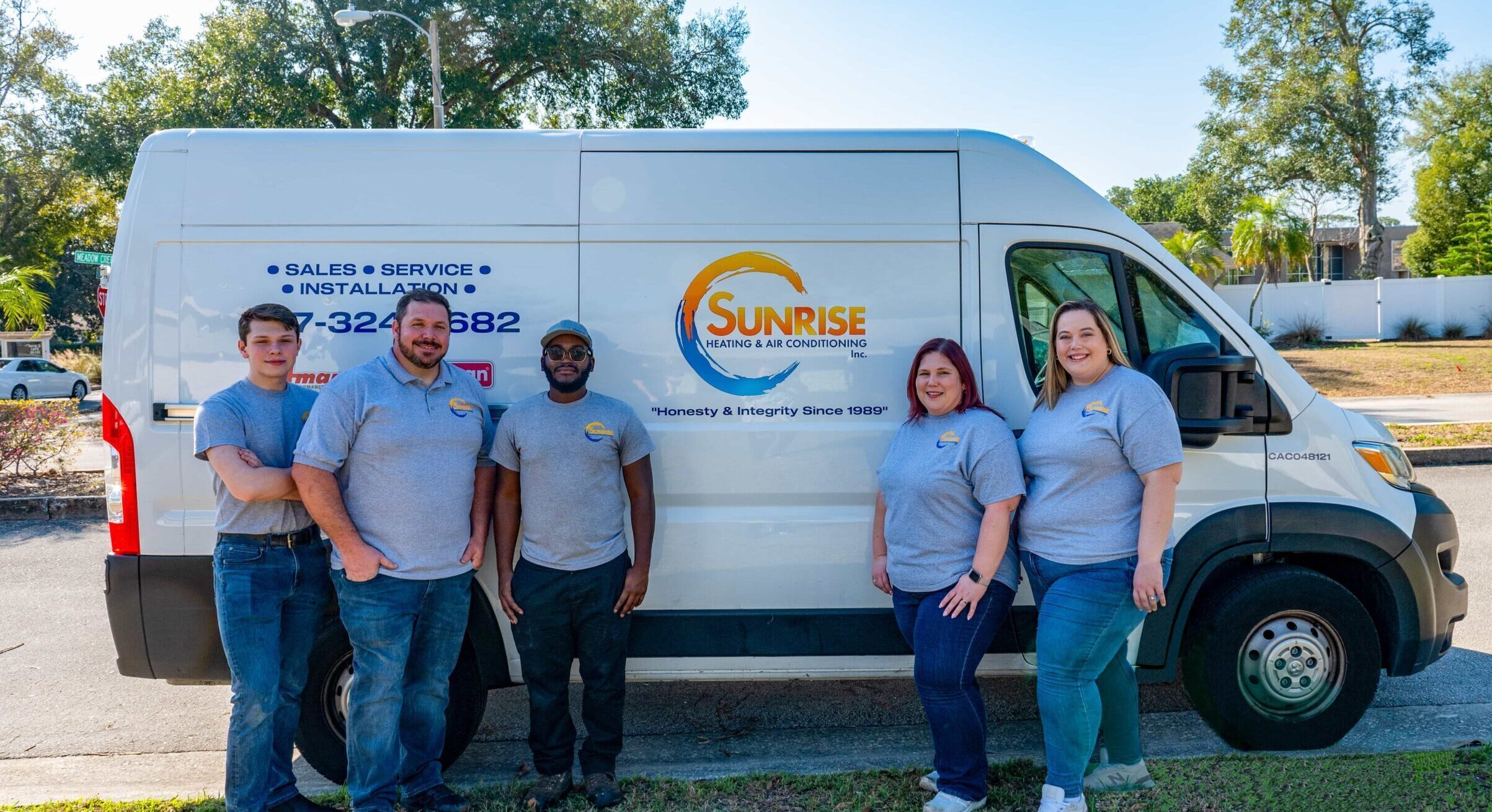
At Sunrise Heating & Air Conditioning, we’ve served Seminole, Orange, Volusia, and Lake Counties since 1989. In 35+ years, we’ve seen what separates trustworthy contractors from those you should avoid. This guide shares what we’ve learned.
Why Choosing the Right HVAC Company Matters More in Florida
HVAC systems in Central Florida face challenges that contractors in other states rarely encounter. This makes local expertise and proper installation critically important.
🌴 What Makes Florida Different
Year-Round Operation
Florida ACs run 10-12 months per year, compared to 4-5 months in northern states. More runtime means faster wear and higher stakes for proper installation.
Extreme Humidity
Florida’s 70-90% humidity requires systems sized for moisture removal, not just cooling. Improper sizing leads to comfort problems and mold growth.
Salt Air Corrosion
Coastal and near-coastal areas face accelerated equipment corrosion. Contractors must know which brands and coatings hold up in Florida conditions.
Lightning & Surges
Florida leads the nation in lightning strikes. Contractors should understand surge protection and storm-related HVAC failures.
⚠️ REAL EXAMPLE: WHAT GOES WRONG
In 2024, we were called to a Lake Mary home where a new AC system had failed after just 18 months. The original installer (a “great deal” the homeowner found online) had undersized the system, skipped the permit, and used improper refrigerant line practices. The result: a $9,000 system that needed $3,400 in repairs and had its manufacturer warranty voided because the installation wasn’t permitted. The homeowner ended up spending more than they would have if they’d hired a reputable contractor from the start.
8 Red Flags When Choosing an HVAC Company
Before we discuss what to look for, let’s cover what to avoid. These warning signs often indicate unlicensed, inexperienced, or dishonest contractors.
| 🚩 Red Flag | Why It’s a Problem |
|---|---|
| Demands cash payment upfront | Legitimate contractors don’t require full payment before work begins. A small deposit is normal; demanding full cash payment is not. |
| “Today only” pricing pressure | High-pressure sales tactics are designed to prevent you from getting competitive quotes. Reputable companies give you time to decide. |
| No written estimate | Verbal quotes allow contractors to change the price later. Always get detailed, itemized estimates in writing. |
| Can’t or won’t show license | Florida law requires HVAC contractors to be licensed. No license means no accountability and potentially illegal work. |
| Quotes without inspecting the home | Accurate quotes require an assessment of your current system, ductwork, and home layout. Phone-only quotes are almost always inaccurate. |
| Price significantly lower than others | Extremely low bids often mean corner-cutting, hidden fees, inferior equipment, or skipped permits. |
| No physical business address | Fly-by-night operators work from P.O. boxes or give fake addresses. They’re impossible to find if something goes wrong. |
| Claims permits aren’t necessary | Most Florida jurisdictions require permits for HVAC installations. Skipping permits can void warranties and create legal issues when selling your home. |
📞 Report HVAC Scams in Florida: If you suspect fraud, contact the Florida Attorney General’s Office at 1-866-9NO-SCAM or visit MyFloridaLegal.com. File contractor complaints with the Florida Department of Business and Professional Regulation (DBPR) at MyFloridaLicense.com.
How to Verify a Florida HVAC Contractor’s License
In Florida, HVAC contractors must be licensed by the Florida Department of Business and Professional Regulation (DBPR) through the Construction Industry Licensing Board (CILB). Here’s how to verify any contractor you’re considering:
Step 1: Visit MyFloridaLicense.com/wl11.asp
Step 2: Search by contractor name, business name, or license number
Step 3: Verify the license is “Current, Active” (not suspended or revoked)
Step 4: Check for any disciplinary actions or complaints
Florida HVAC License Types
Class A (CAC)
Unlimited system size. Can work on any residential or commercial HVAC system statewide.
Class B (CBC)
Limited to systems of 25 tons cooling or 500,000 BTU heating or less. Suitable for residential work.
Also verify: General liability insurance (minimum $ 100,000), workers’ compensation insurance (required if they have employees), and EPA Section 608 Certification (required for refrigerant handling).
10 Questions to Ask Before Hiring an HVAC Contractor
These questions help separate experienced professionals from those who might cut corners. Pay attention not just to answers, but to how confidently and clearly they’re delivered.
1. “How do you determine what size system I need?”
Good answer: “We perform a Manual J load calculation that factors in your home’s square footage, insulation, windows, orientation, and Central Florida’s climate.”
Red flag: Sizing based only on square footage or “what you had before.”
2. “Can I see your state contractor license?”
Good answer: They provide the license number immediately and encourage you to verify it online.
Red flag: Hesitation, excuses, or claims they don’t need one.
3. “Will you pull the required permits?”
Good answer: “Yes, we handle all permits and inspections. They’re included in our quote.”
Red flag: Suggesting you don’t need permits or that you should pull them yourself.
4. “What does your written estimate include?”
Good answer: Itemized list showing equipment model numbers, labor, permits, materials, and any additional costs.
Red flag: Vague lump-sum quotes or “we’ll figure it out as we go.”
5. “What warranty do you provide on labor?”
Good answer: At least 1-2 years on workmanship, separate from the manufacturer’s parts warranty.
Red flag: No labor warranty or vague promises without documentation.
6. “Will you inspect my ductwork?”
Good answer: “Yes, we check ductwork condition and sizing. New equipment won’t perform well if your ducts are leaking or undersized.”
Red flag: No mention of ductwork or dismissing its importance.
7. “How long have you been in business locally?”
Good answer: Established local presence with verifiable history and references in your area.
Red flag: Vague answers, recent arrival, or no local track record.
8. “Do you offer financing options?”
Good answer: Established financing programs through reputable third-party lenders with clear terms.
Red flag: In-house financing with unclear terms or pressure to finance unnecessarily.
9. “Who will actually perform the installation?”
Good answer: “Our own trained technicians. We don’t subcontract installation work.”
Red flag: Subcontracting to unknown workers or frequent turnover.
10. “Can you provide references from recent customers?”
Good answer: Readily provides names and contact information for customers you can call.
Red flag: Unwilling to provide references or only offers online reviews.
What to Look for in a Central Florida HVAC Company
Beyond avoiding red flags, here are the positive attributes that indicate a trustworthy, capable contractor.
📋
Proper Licensing & Insurance
Current Florida HVAC license (Class A or B), general liability insurance, workers’ comp (if they have employees), and EPA 608 certification.
🏆
Local Experience
Years (ideally decades) serving Central Florida specifically. Understanding of local climate challenges, building codes, and permit requirements.
⭐
Strong Reviews & References
Consistent positive feedback on Google, BBB, and other platforms. Willing to provide direct references from recent customers.
🎓
Certifications & Training
NATE certification, manufacturer-authorized dealer status, ongoing technician training. Indicates commitment to quality.
📝
Transparent, Written Estimates
Detailed, itemized quotes that clearly list equipment, labor, permits, and warranties. No hidden fees or surprises.
🔧
Comprehensive Services
Full range of services: installation, repair, maintenance, ductwork, indoor air quality. One company for all your HVAC needs.
Understanding HVAC Quotes: What Should Be Included
A professional HVAC quote should be detailed enough to allow you to compare apples to apples between contractors. Here’s what a complete estimate includes:
✅ Complete Quote Checklist
Equipment Details
- Brand and model number of outdoor unit
- Brand and model number of indoor unit (air handler/coil)
- SEER2 rating and efficiency specifications
- Thermostat brand and model
- Any additional components (UV lights, surge protector, etc.)
Labor & Installation
- Labor costs (hours and rates)
- Removal and disposal of old equipment
- Any required electrical work
- Ductwork modifications (if needed)
- Concrete pad or platform (if needed)
Permits & Inspections
- Permit fees (included or separate?)
- Who pulls the permit?
- Inspection scheduling
Warranties & Guarantees
- Manufacturer parts warranty (years)
- Contractor labor warranty (years)
- Any satisfaction guarantees
- Maintenance plan options
💡 PRO TIP
Get at least 2-3 quotes from different contractors. Compare not just price, but equipment specifications, warranty terms, and what’s included. The cheapest quote often excludes items that others include, making true comparison difficult without detailed breakdowns.
Why Local Experience Matters
A contractor who has worked in Central Florida for years (or decades) understands nuances that newer or out-of-area contractors miss:
🌡️ Humidity-Based Sizing
Florida systems need to remove moisture, not just lower temperature. Local contractors know how to size for dehumidification, not just cooling capacity.
🏠 Local Building Codes
Permit requirements vary by county. Experienced local contractors have relationships with inspectors and know exactly what’s required in Seminole, Orange, Volusia, and Lake Counties.
🔧 Brand Performance History
After installing thousands of systems, local veterans know which brands and models hold up best in Florida’s demanding climate and which to avoid.
⚡ Storm Preparedness
Local contractors understand hurricane-related HVAC issues, surge protection needs, and how to help customers recover quickly after severe weather.
Frequently Asked Questions
❓ How do I verify if an HVAC contractor is licensed in Florida?
Visit MyFloridaLicense.com and search by the contractor’s name, business name, or license number. Look for a “Current, Active” status and check for any disciplinary actions. Florida HVAC contractors need either a Class A or Class B Air Conditioning Contractor license issued by the Construction Industry Licensing Board (CILB).
❓ Do I need a permit for HVAC installation in Florida?
Yes, most Florida jurisdictions require permits for HVAC system installations and replacements. Permits ensure the work is inspected for safety and code compliance. Unpermitted work can void manufacturer warranties, create issues when selling your home, and may not be covered by insurance. A reputable contractor handles all permit applications and inspections.
❓ How many quotes should I get before choosing an HVAC company?
We recommend getting 2-3 detailed, written estimates from licensed contractors. This gives you enough information to compare pricing, equipment, and warranty terms without being overwhelming. Focus on value, not just the lowest price. The cheapest option often cuts corners that end up costing you more over time.
❓ What certifications should HVAC technicians have?
At minimum, technicians handling refrigerants must have EPA Section 608 Certification (federally required). NATE (North American Technician Excellence) certification demonstrates advanced knowledge and is a strong indicator of quality. Manufacturer-specific training (like Amana, Trane, or Carrier certification) ensures technicians can properly install and service specific brands.
❓ Should I choose the cheapest HVAC quote?
Not necessarily. Extremely low quotes often indicate corner-cutting: inferior equipment, skipped permits, minimal warranties, or inexperienced installers. A slightly higher quote from a reputable company with quality equipment, proper installation, and strong warranties typically saves money over the 10-15 year life of your system through fewer repairs, better efficiency, and longer equipment life.
❓ What’s a Manual J load calculation?
Manual J is the industry-standard method for determining the size of the HVAC system your home needs. It accounts for square footage, insulation quality, number and type of windows, ceiling height, home orientation, and local climate. Proper sizing prevents undersized systems that run constantly and oversized systems that short-cycle (both waste energy and shorten equipment life).
❓ How important is the labor warranty vs. the manufacturer warranty?
Both matter. Manufacturer warranties cover defective parts (typically 5-10 years on major components). Labor warranties cover workmanship issues from the installation itself. Poor installation can cause problems the manufacturer won’t cover. Look for contractors offering at least 1-2 years on labor, with longer coverage being better.
❓ What should I do if I think I’ve been scammed by an HVAC contractor?
Report the issue to the Florida Attorney General’s Office (1-866-9NO-SCAM or MyFloridaLegal.com) and file a complaint with the Florida Department of Business and Professional Regulation (MyFloridaLicense.com). Document everything: contracts, payments, photos, and communications. You may also want to consult with a consumer protection attorney.
Why Central Florida Homeowners Trust Sunrise
Since 1989, Sunrise Heating & Air Conditioning has been the trusted choice for families across Seminole, Orange, Volusia, and Lake Counties. Here’s what sets us apart:
🏆
35+ Years
Serving Central Florida
👨👩👧👦
Family Owned
Since 1989
⭐
5.0 Rating
Google Reviews
We provide:
- Full-service HVAC: Installation, repair, maintenance, ductwork, and indoor air quality solutions
- Licensed and insured: FL State License #CAC048121, fully insured, EPA certified
- Authorized Amana dealer: Premium equipment with industry-leading warranties
- Transparent pricing: Detailed written estimates with no hidden fees
- Financing available: Flexible payment options for qualifying customers
- Local expertise: 35+ years of understanding Central Florida’s unique climate challenges
Learn more about extending your AC’s lifespan, comparing heat pumps vs traditional AC, or planning for AC replacement.
Ready to work with a trusted Central Florida HVAC company that’s been serving families like yours for over 35 years? Get a free estimate with no pressure and no hidden fees.
Sunrise Heating & Air Conditioning Inc.
Serving Seminole, Orange, Volusia & Lake Counties
Family Owned & Operated Since 1989
“Honesty & Integrity Since 1989”
Licensed & Insured | FL State License #CAC048121 | EPA Certified | Authorized Amana Dealer
⭐⭐⭐⭐⭐ 5.0 Google Rating
Samantha Beckwith
Co-Owner, Sunrise Heating & Air Conditioning | 35+ Years Industry Experience
Samantha Beckwith is co-owner of Sunrise Heating and Air Conditioning in Altamonte Springs, Florida. With deep HVAC expertise and a customer-first approach, she helps Central Florida homeowners and businesses solve comfort challenges, improve efficiency, and avoid costly breakdowns through honest advice and dependable service.