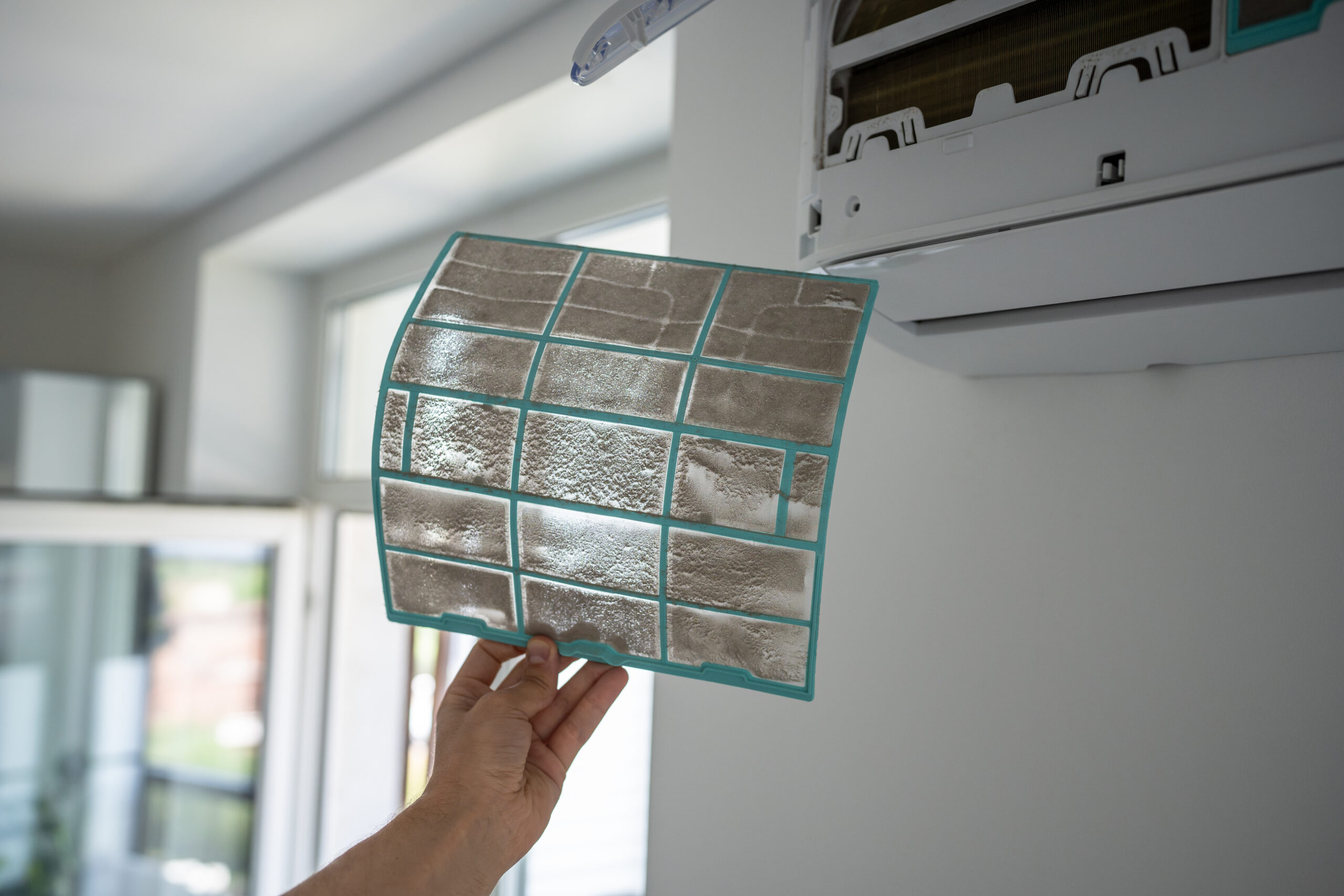
When Central Florida homeowners think about their air conditioning, they usually picture the outdoor unit humming away or the thermostat on the wall. The air filter? It barely crosses most people’s minds.
That’s a problem.
After 35+ years of servicing HVAC systems across Seminole, Orange, Volusia, and Lake Counties, we can tell you this: neglected air filters are one of the top reasons we get called out for repairs that could have been avoided.
The good news? Filter maintenance is one of the easiest (and cheapest) things you can do to protect your system, lower your energy bills, and keep your family breathing cleaner air.
Here’s what every Florida homeowner should know.
What Your Air Filter Actually Does
Most people assume the filter just catches dust. That’s part of it, but there’s more going on.
Your HVAC filter serves two important jobs:
 Job #1: Protecting Your Equipment
The filter catches particles before they reach sensitive components like your blower motor, evaporator coil, and fan. Without it, dirt builds up on these parts, forcing your system to work harder and wear out faster.
 Job #2: Improving Indoor Air Quality
A quality filter traps airborne contaminants before they circulate through your home, including:
- ✓ Dust and dirt
- ✓ Pet dander and hair
- ✓ Pollen and mold spores
- ✓ Lint and fabric fibers
- ✓ Fine particles that irritate lungs and trigger allergies
 Think of your filter as the first line of defense for both your AC system and your family’s health.
Why Filters Matter Even More in Florida
Florida’s climate puts extra demands on your air filter. Here’s why:
 Year-Round Humidity Feeds Mold Growth
Our humidity levels hover between 70-90% for much of the year. That moisture creates ideal conditions for mold, mildew, and bacteria to thrive. A clean filter helps trap mold spores before they spread through your ductwork.
Poor attic insulation can make humidity problems worse by allowing hot, moist air to seep into your home and overwork your system.
 Your AC Runs Almost Constantly
In cooler states, air conditioners might run 4-5 months per year. In Central Florida, your system runs 9-10 months (sometimes longer). That means air passes through your filter far more frequently, and filters clog faster as a result.
 Pollen Season Never Really Ends
Thanks to Florida’s mild winters and diverse plant life, we deal with elevated pollen levels nearly year-round. Oak pollen in spring, ragweed in fall, and grass pollen scattered throughout. A quality filter helps keep these allergens from circulating inside your home.
 Coastal Air Brings Extra Challenges
If you live near the coast (or even within 20-30 miles), salt particles and fine sand can work their way into your HVAC system. These particles are corrosive and can cause long-term damage to components if your filter isn’t doing its job.
What Happens When You Neglect Your Filter
We see the consequences of neglected filters every week. Here’s what can go wrong:
 Restricted Airflow
A clogged filter forces your AC to push air through a wall of dirt and debris. This reduces airflow throughout your home, creates hot and cold spots, and makes your system work overtime.
 Higher Energy Bills
When airflow is restricted, your air conditioner runs longer cycles to reach the temperature you set. A dirty filter can increase your energy consumption by 5-15%, according to the U.S. Department of Energy. In Florida’s summer heat, that adds up fast.
 Frozen Evaporator Coils
When airflow drops too low, the evaporator coil inside your air handler gets too cold and freezes over. Once that happens, your AC can’t cool properly, and you’re looking at a service call.
 Premature System Failure
Extra strain on your blower motor and compressor leads to more breakdowns and a shorter lifespan for your equipment. We’ve seen systems fail years before they should have, all because of poor filter maintenance.
 Mold Growth in Ductwork
Restricted airflow reduces your system’s ability to remove humidity from the air. In Florida’s climate, that lingering moisture can lead to mold growth in your duct work and around your vents.
 Worsening Allergies & Respiratory Issues
A dirty filter stops trapping contaminants effectively. Dust, pollen, and pet dander circulate back into your home, aggravating allergies and asthma symptoms.
If you’re looking to cut costs, energy-efficient upgrades can help, but regular filter changes are the simplest place to start.
REAL EXAMPLE FROM OUR TEAM
Last summer, we visited a Sanford home where the AC had completely stopped cooling. The homeowner hadn’t changed the filter in over 6 months. The result? A frozen evaporator coil and a high repair bill. A filter replaced monthly would have prevented it.
PRO TIP FROM OUR TECHS
If you notice ice forming on your indoor unit or refrigerant lines, turn off the system, check your filter immediately, and let the ice thaw before running the AC again. If the filter looks fine, call a professional because the issue may be deeper.
How Often Should You Replace Your Filter?
This depends on your filter type, household conditions, and how much your system runs. Here’s a general guide:
 Florida-Specific Note: Because our systems run nearly year-round, you’ll likely need to replace filters more frequently than the manufacturer suggests. When in doubt, check your filter monthly. If it looks gray and clogged, it’s time for a new one.
Choosing the Right Filter: Understanding MERV Ratings
Filters are rated on the MERV scale (Minimum Efficiency Reporting Value), which measures how well they capture particles of different sizes. Higher numbers mean finer filtration.
MERV 1-4 NOT RECOMMENDED
Basic fiberglass filters. They catch large particles like dust bunnies and lint but offer minimal protection for your equipment or air quality.
MERV 5-8 GOOD
Good entry-level pleated filters. They trap dust, pollen, and mold spores effectively. A solid choice for most homes.
MERV 9-12 RECOMMENDED
High-quality filters that capture finer particles including pet dander, bacteria, and some smoke particles. Ideal for homes with pets, allergies, or respiratory concerns.
MERV 13-16 HOSPITAL-GRADE
Hospital-grade filtration. These capture even the smallest airborne contaminants but can restrict airflow if your system isn’t designed for them.
Our Recommendation for Central Florida Homes
For most of our customers, we suggest MERV 8 to MERV 11 filters They provide excellent filtration without restricting airflow.
Important: Don’t assume higher is always better. A MERV 13+ filter in a system designed for MERV 8 can actually harm your equipment by restricting airflow too much. If you want to upgrade, check with an HVAC professional first to make sure your system can handle it.
Simple Steps to Get the Most from Your Filter
Replacing your filter regularly is the foundation, but these extra steps help maximize efficiency:
✓ Keep return vents clear Don’t block them with furniture, curtains, or rugs. Your system needs unobstructed airflow.
✓ Vacuum vents and registers periodically Dust buildup around vents gets pulled into your ductwork and clogs filters faster.
✓ Use the correct filter size An improperly fitted filter allows air (and dirt) to bypass the filter entirely. Check the dimensions printed on your current filter before buying replacements.
✓ Check for duct leaks Leaky ducts pull in unfiltered air from attics and crawlspaces, reducing efficiency. Proper duct sealing can improve airflow and lower your energy bills significantly.
✓ Set a reminder It’s easy to forget filter changes. Set a recurring reminder on your phone for the first of each month to check your filter.
✓ Write the date on your filter When you install a new filter, write the installation date on the frame with a marker. This takes the guesswork out of knowing when it was last changed.
When to Call a Professional
Filter maintenance is something most homeowners can handle themselves. But certain situations call for professional help:
 Your filter is getting dirty unusually fast (within 1-2 weeks)
 You notice musty or moldy smells even with a clean filter
 Airflow feels weak even after replacing the filter
- You see ice forming on your indoor unit
 Your energy bills spike without explanation
 You want to upgrade to a higher MERV rating and need to confirm compatibility
During HVAC maintenance, our technicians inspect your filter, clean your coils and blower components, check for duct leaks, and verify that your system is running efficiently. For Florida homes, we recommend scheduling maintenance twice a year (spring and fall) to catch issues before the heavy cooling season.
If your system is 10-15 years old and requiring frequent repairs, it may be time to consider AC replacement. Newer systems are more efficient and often pay for themselves through energy savings.
The Bottom Line: Small Filter, Big Impact
Your air filter might be the most overlooked component in your HVAC system, but it has an outsized effect on your comfort, health, and wallet.
A clean, quality filter:
 Lowers energy bills by improving airflow
- Reduces breakdowns and repair costs
- Extends the life of your equipment
- Improves indoor air quality for your family
- Helps control humidity and prevent mold
For Florida homeowners running their AC nearly year-round, proper filter care can save hundreds of dollars annually and prevent headaches down the road. Combined with other smart habits, you can extend the life of your air conditioner by years.
Frequently Asked Questions About HVAC Air Filters
 How often should I change my AC filter in Florida?
Need Help Choosing the Right Filter or Setting Up a Maintenance Plan?
At Sunrise Heating & Air Conditioning, we’ve been helping Central Florida families stay comfortable since 1989. As a proud Amana brand dealer, we install and service high-quality equipment built to handle Florida’s demanding climate.
Whether you need guidance on filter selection, want to schedule a tune-up, or have questions about improving your indoor air quality, we’re here to help.
 Call (407) 324-0682
Sunrise Heating & Air Conditioning Inc.
Serving Seminole, Orange, Volusia & Lake Counties
Family Owned & Operated Since 1989
“Honesty & Integrity Since 1989”
Licensed & Insured | FL State License #CAC1823383 | EPA Certified
 5.0 Google Rating